
EcoInvaders: Electronic Field Trip

Welcome to EcoInvaders!
In this Electronic Field Trip (EFT), students will embark on a scientific adventure to discover how invasive plants shape the world around us.
Connect your students LIVE with researchers from the University of Florida’s Flory Lab and the UF/IFAS Center for Aquatic and Invasive Plants (CAIP).
Students will explore what makes a species invasive, how these plants spread, and the impacts they have on native ecosystems.
Through hands-on demonstrations and real-world examples, students will learn how scientists study and manage invasive species to help protect Florida’s diverse environments.


Sign Up Today!
Interested in joining us on this journey? Please complete the registration form linked here: https://forms.gle/EqniJhXv54kv5Evp7
Dates and Times
We have two LIVE electronic field trips scheduled for:
- November 5 at 10am and 3:30pm (The Flory Lab)
- November 19 at 10am and 3:30pm (UF/IFAS Center for Aquatic and Invasive Plants)
Educator Guide
Prepare your students and technology for EcoInvaders, and see what learning objectives and standards are supported by EcoInvaders.
View and download our Educator Guide for more information.

Our Experts

Click on the dropdown arrows below to learn more about our scientist guests for each electronic field trip!
The Flory Lab

Dr. Luke Flory: Luke Flory’s research focuses on the mechanisms and impacts of non-native species invasions with the goal of understanding mechanisms and impacts of invasions, and the long-term consequences of interactions between invasive species and other global change drivers such as climate change, emerging pathogens, and urbanization. The Flory Lab explores basic and applied questions in natural and managed ecosystems such as the highlands of Galápagos, urban sites in Zagreb, Croatia, eastern deciduous forests in the US, and pine forests and managed systems in Florida. Luke has been named a Fulbright U.S. Scholar, Florida Climate Institute Distinguished Faculty Fellow, UF Research Foundation Professor, and UF International Educator of the Year. He holds a M.Sc. in Applied Ecology and a Ph.D. in Ecology and Evolutionary Biology from Indiana University
Yukti Taneja (Ph. D. student): Yukti is a doctoral researcher passionate about understanding the ecological processes that allow some plant populations to become highly abundant and persistent. Her research focuses on biological invasions and the complex relationships between species that influence the success of invasive plants and the decline of native species. Through her Ph.D. studies, Yukti investigates how mutualistic interactions are acquired, maintained, and reorganized, and how these relationships can help invasive plants establish, spread, and thrive in new environments. Her work aims to deepen our understanding of invasion ecology and inform strategies for protecting native ecosystems.

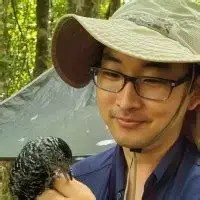
Dr. Seokmin Kim: Dr. Kim oversees literature-based assessments of non-native species, proposed introductions, and new agricultural and horticultural cultivars to evaluate their invasion risk in Florida. His broader research interests focus on understanding how human-driven disturbances affect ecosystems and evaluating the effectiveness of conservation and management strategies. His Ph.D. dissertation at the University of Miami examined mutualistic relationships between frugivorous animals and plants, with an emphasis on seed dispersal and recruitment in the Lesser Antilles. He has also studied the effects of megafauna exclusion on arthropod communities in Kenya and helped assess the seed dispersal potential of African forest elephants in Gabon. As a Returned Peace Corps Volunteer (Fiji), Dr. Kim is a strong advocate for collaborating directly with local communities to address environmental challenges.
Center for Aquatic and Invasive Plants (CAIP)

Dr. Eli Russell: Dr. Russell is an Assistant Professor for aquatic plant management at the UF/IFAS Center for Aquatic and Invasive Plants (CAIP). Dr. Russell’s research program will focus on developing integrated weed management tactics for addressing problematic aquatic plants. His extension program will focus on providing vital control and management information to key and affected stakeholders.
Dr. Russell grew up just north of the Florida panhandle in Opp, Alabama. He earned his bachelor’s degree in Crop and Soil Science from Auburn University, where he became fascinated with weed science. Eli went on to earn a master’s in turfgrass weed science from Auburn University and a PhD in crop weed science from Virginia Tech. Dr. Russell loves studying weeds and can often be found looking for them everywhere he goes.
Abi Schulken: Abi Schulken is a Master’s student with the Russell Lab in the Center for Aquatic and Invasive Plants at the University of Florida. Prior to this, Abi earned a Bachelor of Science in Biological Sciences with a concentration in Ecology, Evolution, and Behavior from Virginia Tech in May 2024 and spent several months working in the Agroecology Lab at Archbold Biological Station’s Buck Island Ranch. Abi’s interests lie at the intersection of ecology and agriculture, with experience spanning agroecology, food systems, environmental conservation, and weed science. Guided by a belief that interdisciplinary action can move the needle on global issues such as climate change, food insecurity, land degradation, and biodiversity loss, Abi is driven by one core tenet: make the world a better place.

Get Connected
- List Streaming Science & AEC, socials and Dr. Loizzo contact info
- Streaming Science Instagram Page
- UF Agricultural Education and Communications Instagram Page
- Dr. Jamie Loizzo 352-273-1663
jloizzo@ufl.edu
Recordings
Can’t attend the LIVE electronic field trips? We will provide the recordings here for future use.
Our Team

Faculty, graduate, and undergraduate students in the UF Department of Agricultural Education and Communication in the Fall 2026 semester.